
Skip to product information
1 of 2

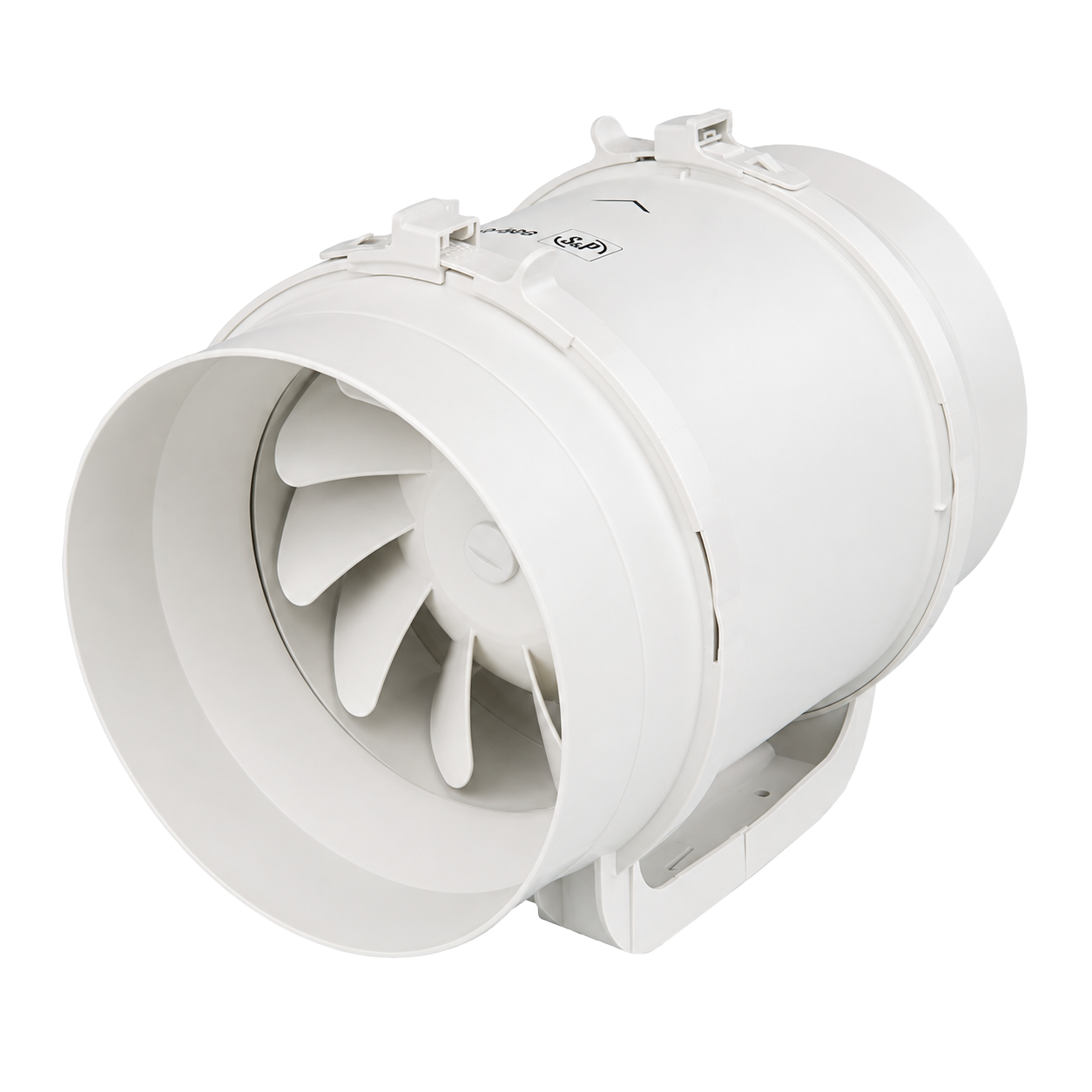
S&P TD-350/125 Standard In-Line Fan - Rated @91.6l/s 2 speed

S&P TD-350/125 Standard In-Line Fan - Rated @91.6l/s 2 speed

SKU : TD-350/125

Overview

The S&P TD-350/125 Standard In-Line Fan is a compact mixed-flow duct fan designed for use with 125mm circular ducting in residential and light commercial ventilation systems. Delivering an airflow of up to 330m³/h (91.6l/s), it provides effective extraction while its low-profile design makes it suitable for installation within ceiling voids and other areas where space is limited.
£116.88 GBP Excl. VAT: £97.40 GBP

Out of Stock

  • For warranty information, please refer to the manufacturer’s warranty policy or contact them directly.
View full details

Description

Product Part Number

TD-350/125

Description

The S&P TD-350/125 Standard In-Line Fan is a compact mixed-flow duct fan designed for use with 125mm circular ducting in residential and light commercial ventilation systems. Delivering an airflow of up to 330m³/h (91.6l/s), it provides effective extraction while its low-profile design makes it suitable for installation within ceiling voids and other areas where space is limited.

The two-speed motor provides a choice of 250m³/h or 330m³/h, allowing the airflow to be selected according to the ventilation requirements of the installation. The motor can also be used with a compatible voltage speed controller where further airflow adjustment is required.

Manufactured with a reinforced polypropylene casing and an ABS mixed-flow impeller, the TD-350/125 offers a durable yet lightweight construction. Its integrated support bracket allows the motor and impeller assembly to be removed for inspection or maintenance without disconnecting the adjoining ductwork, helping simplify installation and ongoing servicing.

Technical Specification

Specification Details
Manufacturer Soler & Palau (S&P)
Model TD-350/125
Manufacturer reference 5211306500
Fan type In-line mixed-flow duct fan
Nominal duct diameter 125mm
Number of speeds 2
Maximum airflow – high speed 330m³/h / 91.6l/s
Maximum airflow – low speed 250m³/h / 69.4l/s
Motor speed – high 2,050rpm
Motor speed – low 1,590rpm
Maximum absorbed power – high 25W
Maximum absorbed power – low 20W
Maximum absorbed current – high 0.11A
Maximum absorbed current – low 0.09A
Sound pressure level – high 33dB(A) at 3 metres
Sound pressure level – low 28dB(A) at 3 metres
Electrical supply 230V, single phase, 50Hz
Operating air temperature −20°C to +40°C
Protection rating IP44
Electrical protection class Class II
Motor insulation class Class B
Motor bearings Ball bearings, greased for life
Motor protection Safety thermal overload protection
Casing material Reinforced polypropylene
Impeller material ABS
Speed control Direct two-speed connection and compatible with voltage speed control
Weight 2kg
Overall length 258mm
Maximum casing diameter 176mm
Connection spigot diameter 123mm, for 125mm ducting
Compatible controls COM-2, REGUL-2, RMB-1.5 and REB-1
Mounting Integrated removable support bracket

Frequently Asked Questions

  • What is an extractor fan used for?

    An extractor fan removes humid, stale or polluted air from a room. They are commonly used in bathrooms, kitchens, utility rooms and other areas where moisture, odours or poor airflow can build up.

  • What extractor fan do I need for a bathroom?

    The right bathroom extractor fan depends on the room size, installation location, duct route and control type required. Timer, humidity and low-carbon options are available depending on the project.

  • Can extractor fans help with condensation?

    Yes, extractor fans can help reduce condensation by removing humid air from wet rooms. However, condensation can also be affected by insulation, heating, airflow and overall ventilation.

  • What is a D-MEV fan?

    A D-MEV fan is a decentralised mechanical extract ventilation fan. It usually runs continuously at a low rate, with boost options when more extraction is needed.

  • What is the difference between an extractor fan and an inline fan?

    A standard extractor fan is usually mounted on a wall, window or ceiling. An inline fan is installed within the duct run, often in a loft or ceiling void, and can be useful where a longer duct route is needed.