
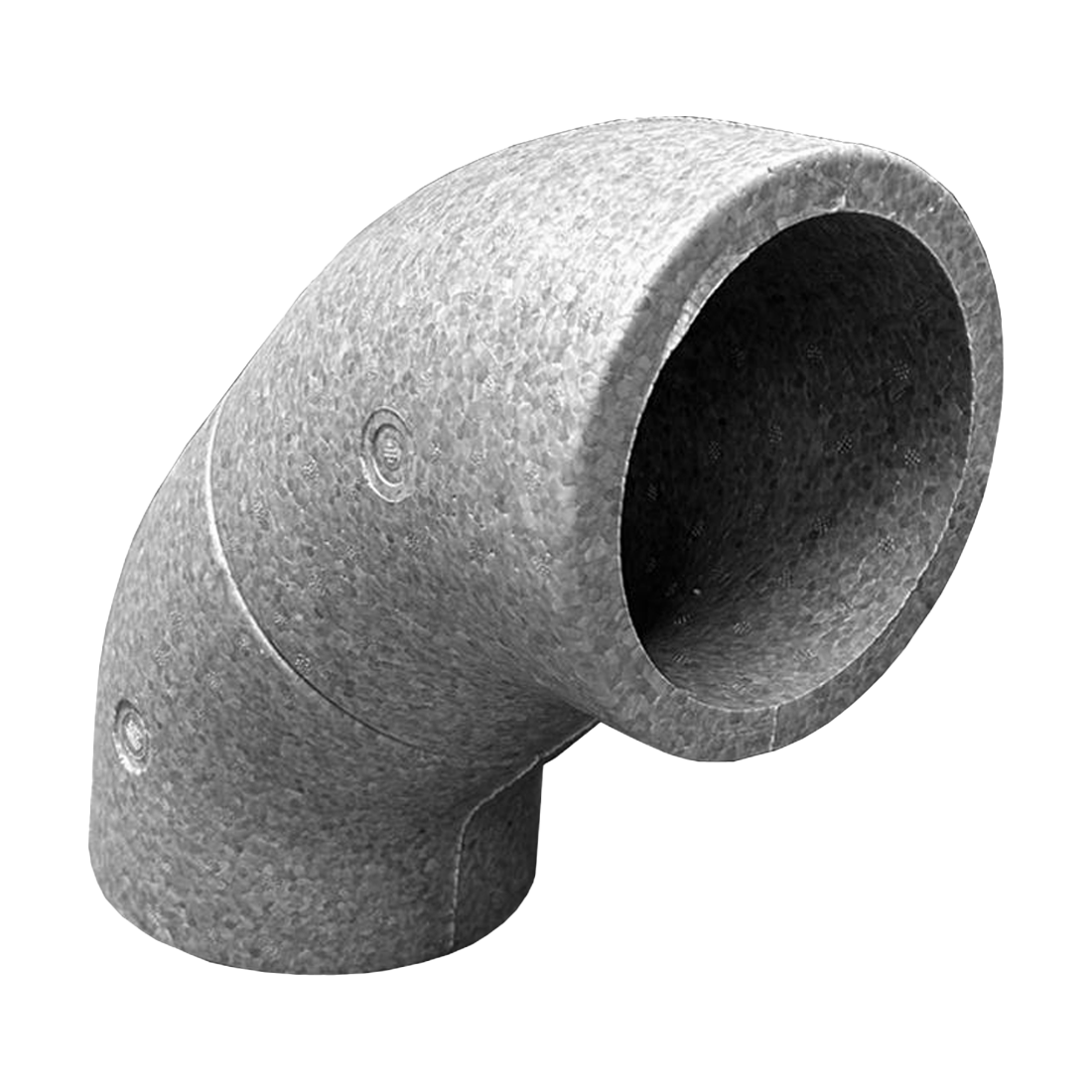
Thermal 90 degree bend (Fire Retardant)
Thermal 90 degree bend (Fire Retardant)
SKU : QV-TH-125-90-B
Overview
The Q-V Thermal 90° Bend is a high-quality, fire-retardant ducting component designed to provide smooth directional airflow changes while maintaining thermal insulation and safety standards. Available in 125mm, 150mm, and 200mm internal diameters, this 90-degree bend is ideal for MVHR, industrial ventilation, and insulated ductwork systems.In Stock
Couldn't load pickup availability
 For warranty information, please refer to the manufacturer’s warranty policy or contact them directly.


Download Files
Description
Product Part Number
Thermal 125mm 90 degree bend - QV-TH-125-90-B
Thermal 150mm 90 degree bend - QV-TH-150-90-B
Thermal 200mm 90 degree bend - QV-TH-200-90-B
Product Overview
The Q-V Thermal 90° Bend is a high-quality, fire-retardant ducting component designed to provide smooth directional airflow changes while maintaining thermal insulation and safety standards. Available in 125mm, 150mm, and 200mm internal diameters, this 90-degree bend is ideal for MVHR, industrial ventilation, and insulated ductwork systems.
It is manufactured from EPP (Expanded Polypropylene), a tough, resilient, and impact-resistant foam that can recover from multiple impacts. The material is impregnated with a flame retardant to GB8624 Class B1 and is currently under test to EN 13501-1 Class B, ensuring both durability and enhanced fire safety.
Crafted for demanding environments, each bend ensures secure fitment, efficient airflow, and long-lasting performance while meeting modern fire safety regulations.
Technical Specifications
- Available Sizes: 125mm, 150mm, and 200mm internal diameters
- Bend Angle: 90 degrees
- Material: EPP (Expanded Polypropylene), fire-retardant
- Application: Suitable for MVHR systems, ducting, thermal insulation, and industrial airflow setups
- Function: Enables clean and efficient 90° directional transitions
- Safety First: Built to meet fire resistance standards in compliance with modern regulations
Frequently Asked Questions
-
What is thermal ductwork used for?
-
Where is thermal ductwork commonly installed?
-
Does insulated ducting prevent condensation inside the duct?
-
Is thermal ducting a building regulation requirement?
-
Do I still need thermal ducting if the loft itself is well insulated?